

Professor Julia Boffey
1953–2026
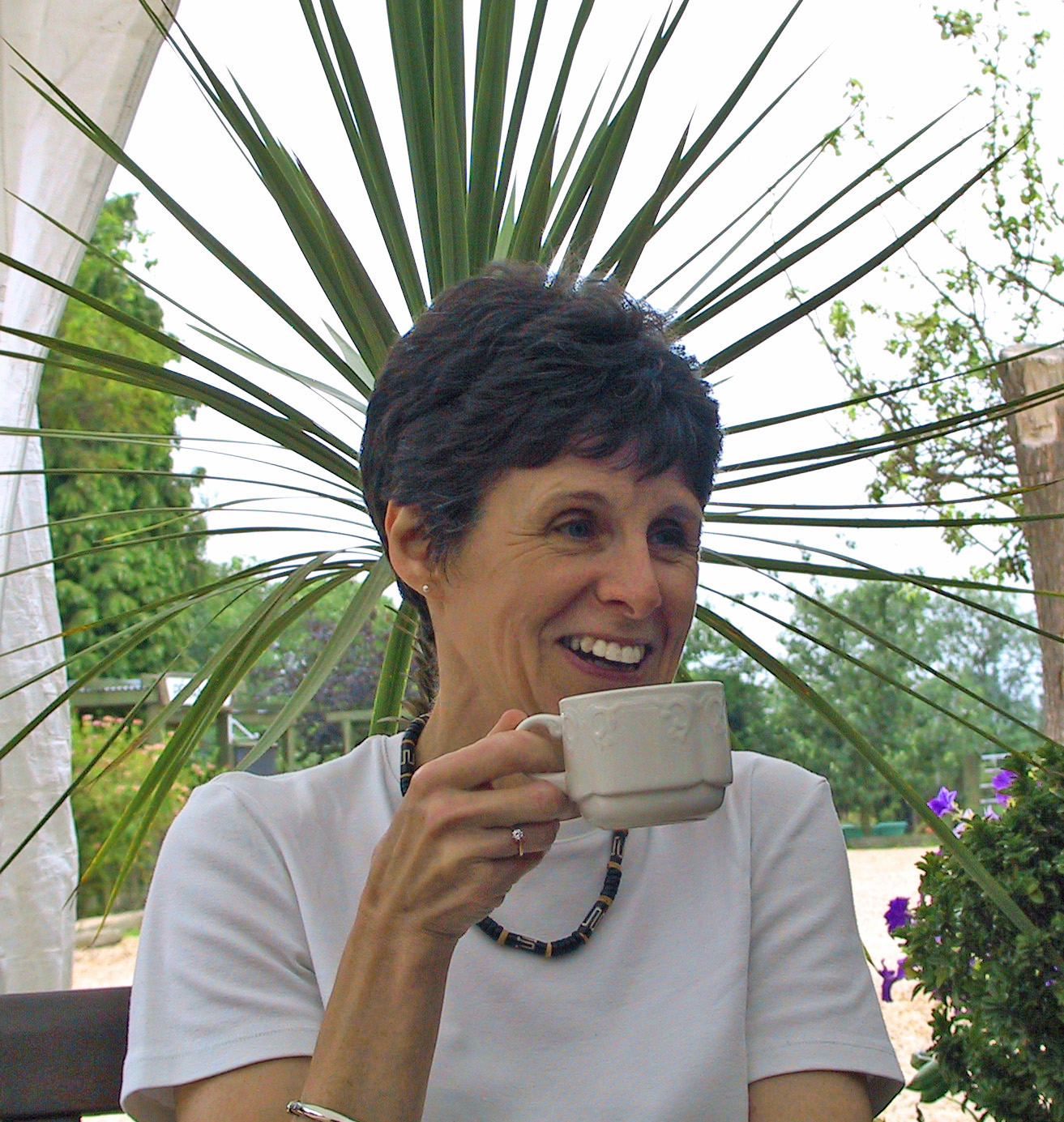
It is with sorrow that the Steering Committee announce the death of Julia Boffey, Professor Emerita of Medieval Studies at Queen Mary, University of London. Julia was a member of the Harlaxton Steering Committee for three decades and a regular speaker and attender at the Harlaxton Medieval Symposium. The photograph displayed here shows Julia (whose appearance changed little over the years) at the excursion for the 2005 Symposium ‘Recording Medieval Lives’, which she convened with Virginia Davis, published by Shaun Tyas in 2009 as Harlaxton Medieval Studies XVII. In 2018 she convened ‘Performance, Ceremony and Display in Late Medieval England’, published in 2020 as Harlaxton Medieval Studies XXVII. Her articles appear in a number of Symposium Proceedings and in numerous other edited books and journals. Amongst her single-authored books are Manuscripts of English Courtly Love Lyrics in the Later Middle Ages (1985), Fifteenth-Century English Dream Visions (2003), Manuscript and Print in London, c. 1475-1530 (2012), Henry VII’s London , in ‘The Great Chronicle’ (2019).
Her co-authored/edited books were with Janet Cowen in 1991, Pamela King in 1995, John Scattergood in 1997, J.B. Trapp and Douglas Gray in 2002, Virginia Davis in 2009, and Christiania Whitehead in 2018. However, her closest collaboration was with her husband, the medievalist scholar A.S.G. (Tony) Edwards, with whom she published, among other books and articles, A New Index of Middle English Verse in 2005, A Companion to Fifteenth-Century English Poetry in 2013, and the third volume (1400-1500) of The Oxford History of Poetry in English in 2022. At the time of her death she and her husband were general editors for the new multi-volume Cambridge Chaucer.
Julia took her BA and MA degrees in English at Newnham College, Cambridge, and studied for her D.Phil. on the courtly lyric under the stellar team of Derek Pearsall and Elizabeth Salter at York, where they, with Barrie Dobson (former Chair of the Harlaxton Steering Committee), had established the renowned Centre for Medieval Studies in 1968. She was involved in several of the Manuscripts Conferences held in York and elsewhere, and in the Early Book Society conferences from its inception. In 1980 she joined the Department of English at Queen Mary College, University of London (as it was known then), where she continued her interest in English medieval and early modern verse (to which was later added chronicles) and taught a variety of medieval literature courses, as well as supervising numerous doctoral degrees. Before her retirement in 2022, she was honoured by her colleagues in the 2019 Festschrift Manuscript and Print in Late Medieval and Early Modern Britain, edited by Tamara Atkin and Jaclyn Rajsic.
After retirement Julia continued her research interests and continued to serve in several academic contexts, apart from Harlaxton, as a member of Council of the Early English Text Society, a member of the editorial board of the Early English Text Society in its Texts & Transitions series with Brepols, as a Trustee of the Yorkist History Trust, and as President of the Society for Medieval English Language and Literature, among other roles. Even when diagnosed with motor neurone disease in 2025, she continued to work, submitting a week before her death on 11th September 2026 a final paragraph for her essay ‘No cytie to it lyke’: writing the urban geography of late medieval London’, which she had delivered at the 2025 Harlaxton Symposium on The Medieval City, convened by Richard Asquith, Rachael Harkes, and Christian D. Liddy, and which will be published in 2027.
Julia inspired in everyone the same feelings of affection, admiration, and respect. She was an excellent scholar, a generous and assiduous collaborator, someone who could always be relied on to take on a task, even to her own inconvenience, and a calm and wise friend and teacher. A final tribute may be given by Caroline Barron, who served with her longest on the Harlaxton Steering Committee: ‘Julia was an exceptional person: a sharp and perceptive scholar but always considerate, helpful and constructive. Everybody loved and respected Julia: I never heard anyone speak ill of her but, then, she did not speak ill of other people. She was a gracious person in every sense of the word.’
harlaxtonsymposium@gmail.com